
Lightweight Evaluation for New Solutions (LENS)
Architecting for Scale: Setting the Stage for LENS

Navigating Complexity: The Rise of Architectural Frameworks
The history of scalable systems architecture mirrors the evolution of the digital era itself, a continuous pursuit of efficiency, resilience, and adaptability. In the earliest stages of computing, scalability was largely a hardware concern. Systems grew vertically, scaling by adding more capacity to a single mainframe. As organizations expanded, the limitations of such architectures became evident. This gave rise to distributed systems, where computation and data were split across multiple nodes, enabling horizontal scalability and fault tolerance.
By the 1990s, architectural innovation accelerated. Client-server models and service-oriented architectures (SOA) allowed enterprises to decouple services and manage them independently. Later, the advent of cloud computing, containerization, and microservices transformed scalability from a technical challenge into a business enabler. Modern systems like Netflix's adaptive streaming, Amazon's elastic retail platform, and financial exchanges capable of processing millions of trades per second exemplify architectures designed not only for scale but also for continuous evolution.
Those innovations were underpinned by a series of architectural decisions deliberately made to enable the business to scale. Along the way, teams encountered minor challenges—such as naming conventions and exception handling—but these were insignificant compared to the complex trade-offs and high-stakes decisions they had to make. Many of those decisions did not align with any established framework commonly used in large organizations. Instead, they were guided by a singular question: How can technology best enable the business?
The Shift Toward Structured Decision-Making
As systems grew in complexity, enterprises needed methodologies to ensure architectural consistency across teams, regions, and technologies. This demand led to the emergence of formal architectural frameworks.
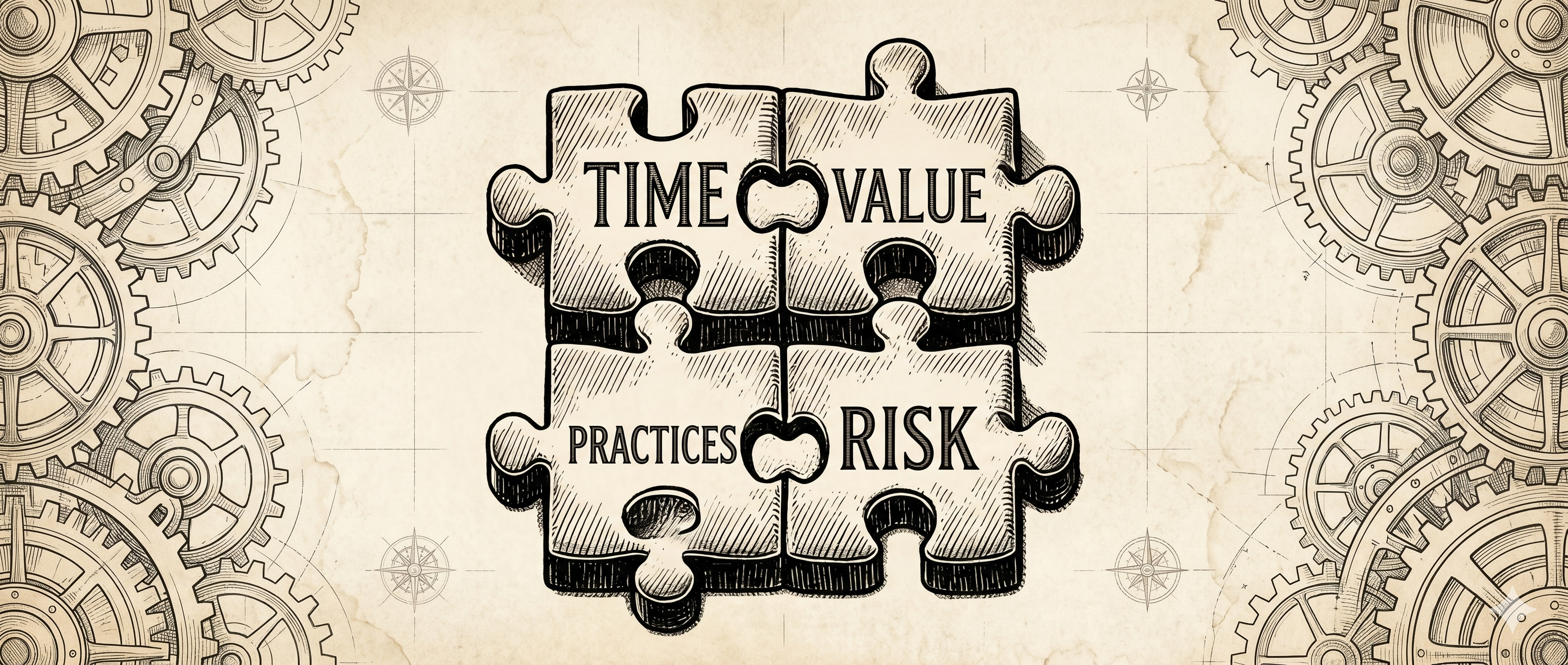
In the ever-evolving landscape of enterprise architecture and beyond, decision-making is a multifaceted process that requires careful consideration of various factors. Among these, the LENS framework—comprising Time, Value, Practice, and Risk—emerges as a guiding light, supporting the path to informed choices and strategic actions. Let's have a deeper look into each element and explore its significance in shaping our decisions.
Time: The Precious Currency of Life and Business
Time, often hailed as the most precious commodity, dictates the rhythm of life and business alike. In the realm of enterprise architecture, time serves as a critical factor in determining success. Consider the concept of "time to market"—the speed at which a product or service is brought to market can significantly impact its competitiveness and market share. For instance, a delay in launching a new software solution could mean missing out on lucrative opportunities and losing ground to competitors.
In our personal lives, time manifests in various forms, from the deadlines we race to meet to the moments we cherish with loved ones. Every decision we make carries an implicit consideration of time—whether it's the time required to pursue a new hobby, the time invested in nurturing relationships, or the time allocated to self-care and reflection.
Value: Evaluating Worth and Impact
Value lies at the heart of decision-making, serving as the compass that guides us toward meaningful outcomes. In enterprise architecture, value takes on multifaceted dimensions, encompassing financial returns, strategic alignment, and customer satisfaction. For example, when implementing a new IT infrastructure, decision-makers must weigh the potential return on investment (ROI), considering factors such as increased efficiency, reduced operational costs, and enhanced scalability.
Similarly, in our personal lives, value manifests in the pursuit of goals that align with our aspirations and principles. Whether embarking on a career change, investing in education, or nurturing personal relationships, we continually assess the worth of our actions in terms of their contribution to our overall well-being and fulfillment.
Practice: Fostering Expertise and Refinement
Practice makes perfect—or so they say. Practice in enterprise architecture encompasses the consistent application and refinement of methodologies, frameworks, and practices to achieve expertise and excellence in various areas. For instance, organizations often adopt agile methodologies like Scrum or Kanban in software development, emphasizing iterative development, collaboration, and continuous improvement. Similarly, IT service management practices such as ITIL provide guidelines for managing IT services and processes effectively, ensuring alignment with business objectives.
Enterprise architecture frameworks like TOGAF or Zachman Framework offer structured approaches to designing and implementing architecture, optimizing resource utilization and facilitating strategic decision-making. Additionally, modern software development practices like continuous integration and continuous deployment (CI/CD) and DevOps promote automation, collaboration, and efficiency across development and operations teams. EA can't deliver without practices!
In our personal lives, practice manifests in the pursuit of mastery and skill development. Whether learning a musical instrument, honing a craft, or mastering a new language, consistent practice is key to unlocking one's full potential. Deliberate practice involves setting specific goals, seeking feedback, and persistently refining one's skills over time.
Risk: Navigating Uncertainty and Opportunity
Risk is an inherent aspect of decision-making, presenting both challenges and opportunities on the path to success. In enterprise architecture, risk assessment is fundamental in identifying potential threats to business continuity and capitalizing on emerging opportunities. For instance, when evaluating the adoption of new technologies, decision-makers must assess the associated risks, such as cybersecurity threats, compatibility issues, and vendor reliability.
In our personal lives, risk manifests in the pursuit of growth and fulfillment. Whether embarking on a new adventure, pursuing entrepreneurial ventures, or making life-changing decisions, we weigh the potential risks and rewards, striving to strike a balance between caution and courage. Embracing calculated risks can lead to personal and professional growth, opening doors to new experiences and opportunities for learning and development.
Conclusion
The LENS framework—serves as a guiding compass in the complex terrain of decision-making, both in enterprise architecture and beyond. By embracing these elements and integrating them into our decision-making processes, we can navigate uncertainties, seize opportunities, and chart a course toward success and fulfillment in life and business alike.
These topics are explored in much greater depth in our book The Highway Path to Scalable Systems, co-authored with Jasser Mahmoud.